

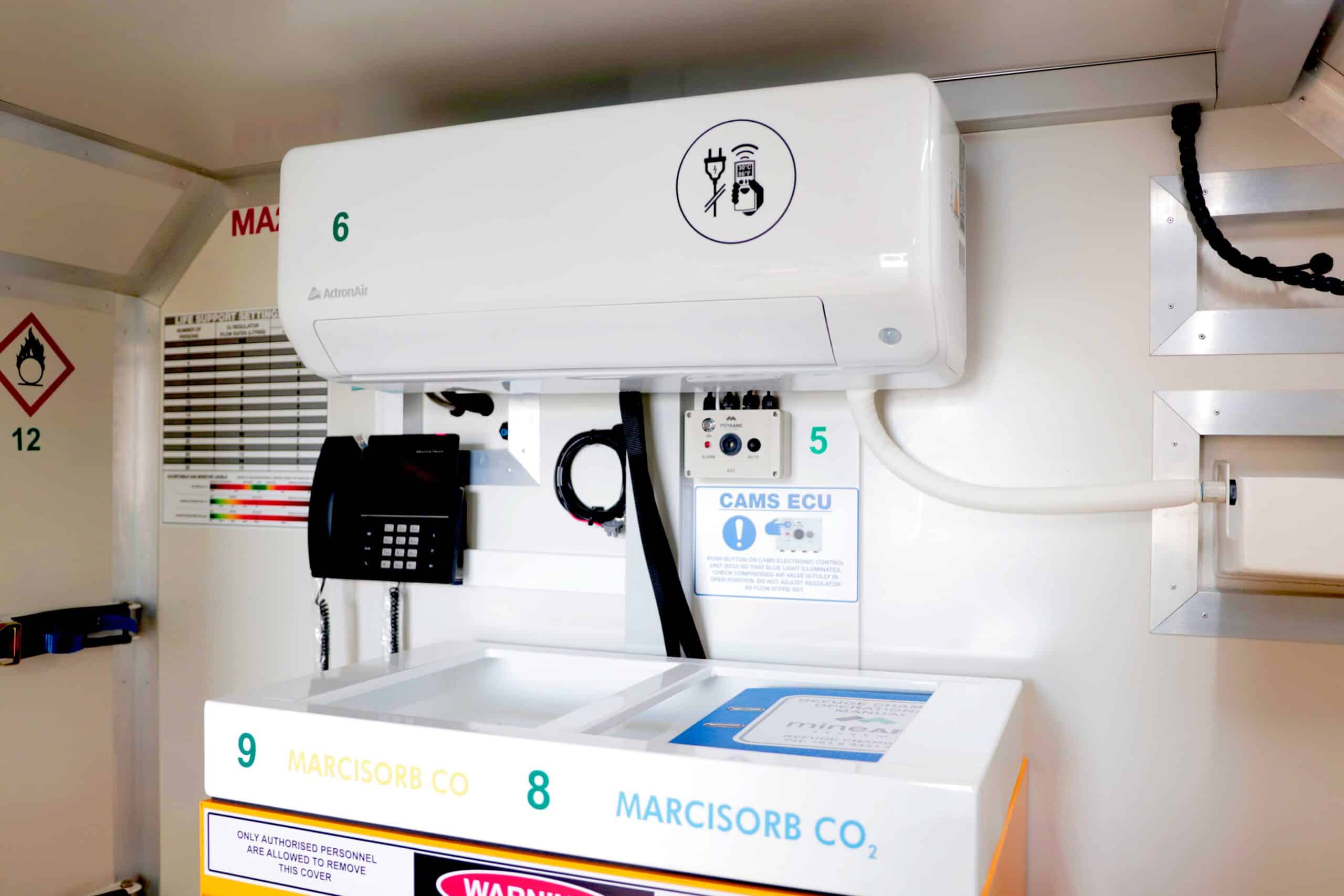
Why Air-Conditioning Is Critial In Refuge Chambers
In underground mining emergencies, refuge chambers are designed to provide a temporary safe haven when workers cannot immediately evacuate. While many people associate air conditioning with comfort, in this environment it becomes a critical life-support system. When occupants are sealed inside a refuge chamber, the heat generated by their bodies and the moisture from breathing quickly increase both temperature and humidity. Without proper environmental control, these conditions can rapidly escalate into dangerous heat stress. Air conditioning systems therefore play a vital role in maintaining survivable conditions by regulating both temperature and humidity for the duration of chamber occupancy.
Why Do We Need Air Conditioning?
Air conditioning in your home is for comfort, but in a refuge chamber it’s a life-saving piece of equipment.
Your body generates metabolic heat constantly as a result of activity, digesting food and just keeping all your cogs turning. You also breathe out warm, moist air, meaning if you were inside a sealed refuge chamber it will quickly start getting hot and wet – this is where the air conditioner comes in.
What Does An Air Conditioner Do?
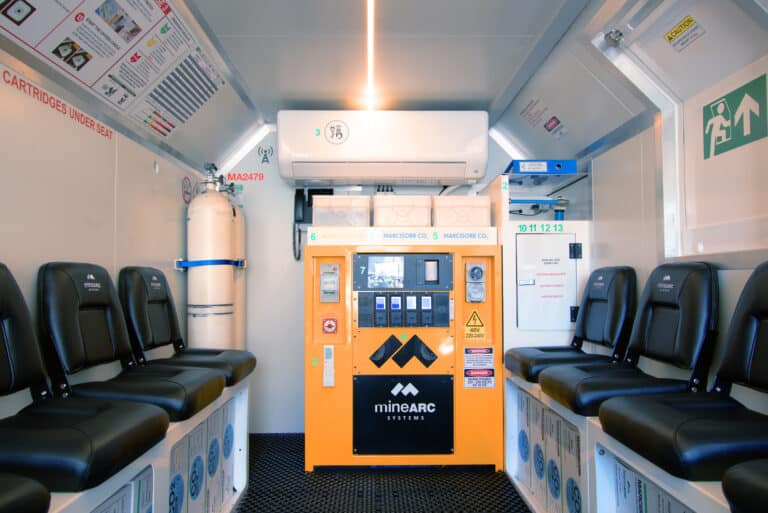
MineARC’s split system air conditioners allow us to control the temperature and humidity of the air in a refuge chamber to provide a comfortable, survivable atmosphere for the duration of occupancy. They do this by using two types of cooling:
Sensible Cooling – This is the reduction of the air temperature, often referred to as the dry-bulb air temperature.
Latent Cooling – This cools the air to remove moisture, reducing the humidity.
An air conditioner provides both types of cooling which is very important to prevent the occupants of a refuge chamber from being subject to heat stress.
What Is Heat Stress?
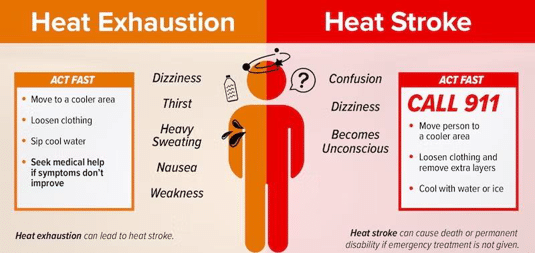
Heat stress is when your body cannot adequately cool itself, which occurs when the air is at a high temperature and high humidity. The humidity is just as significant as the air temperature as if the air is too humid your body cannot evaporate sweat, meaning you can’t cool down.
Heat stress is serious. It can cause weakness, fatigue, cramps, headaches, nausea and fainting. In a refuge chamber where someone could be trapped for more than 24 hours heat stress could lead to heat stroke and ultimately become fatal.
How Does MineARC Control This Risk?
MineARC’s Engineering department takes great care in sizing the air conditioners correctly for the appropriate refuge chamber occupancy, duration, external conditions and even shape, sometimes including insulation to help control heat from outside. In addition to this, engineering also takes account of all the extra sources of heat such as the electrical equipment and even the chemical conversion of MARCISORB, to ensure we provide the safest solution for our customers.
If The Air Conditioner Is the Right Size, Are We All Set?
Unfortunately, no. Not all air conditioners perform the same, even when they have the same cooling capacity rating. Having a refuge chamber without the correct aircon can create a serious safety risk because the chamber designs rely on very specific cooling performance, not just the advertised power rating.
For example, when comparing a Mitsubishi GS-series standard 2.5 kW air conditioner to the the Mitsubishi AP-series – on paper they look almost identical, but when you review the manufacturer’s detailed performance data the AP unit removes about 64% less moisture (latent cooling).This means that if an AP unit was substituted into a standard 12-person refuge chamber, conditions could begin approaching heat-stress levels in under two hours.
So, while a replacement unit might appear equivalent, it may not actually provide safe environmental control. For this reason, any air conditioner changes or substitutions should be approved by Engineering before installation.
How To Prevent This From Happening
In refuge chamber design, maintaining safe environmental conditions is not simply about installing an air conditioner with the right power rating. Effective temperature and humidity control requires careful engineering, correct system sizing and the use of approved equipment that performs reliably under real operating conditions. Substituting components without proper evaluation can compromise the chamber’s ability to manage heat and humidity, potentially placing occupants at risk. By ensuring refuge chambers are equipped with properly specified and approved air conditioning systems, operators can help safeguard the wellbeing of personnel during emergency situations when these systems matter most. At MineARC, this level of engineering diligence is built into every refuge chamber design to ensure the safest possible environment when it is needed most.