

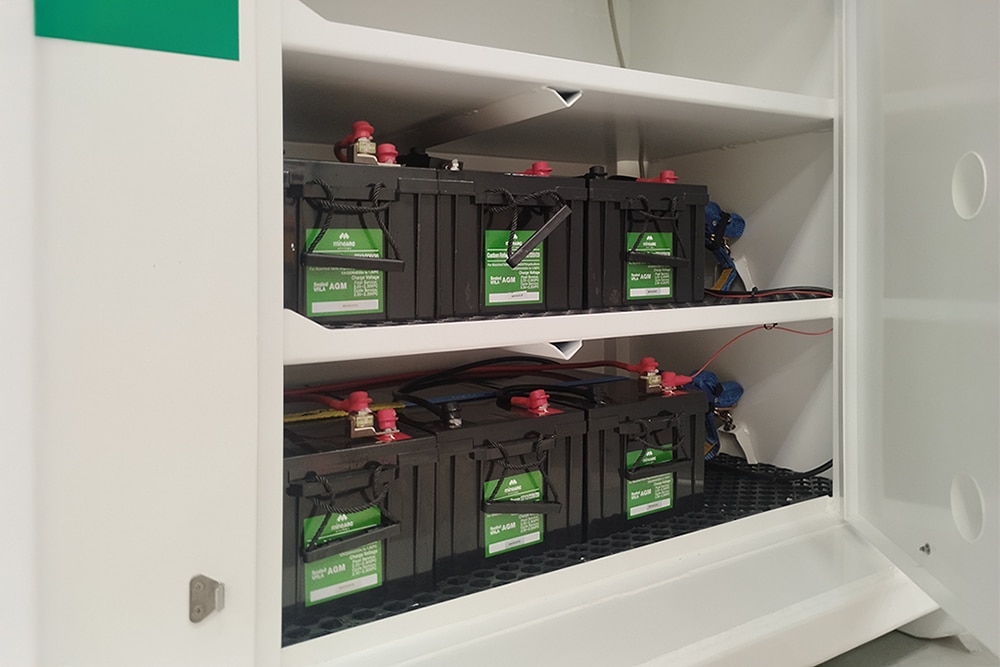
Power is the lifeline of every underground refuge chamber. During an emergency, the Uninterruptible Power Supply (UPS) must keep critical life-support systems running for the full refuge duration – without compromise. For decades, MineARC has relied on VRLA Absorbed Glass Mat (AGM) batteries for this role. With lithium-ion batteries becoming more common in industrial applications, many sites are now asking whether they could be a suitable alternative.
Let’s break down the key differences between AGM and lithium-ion systems and explain why AGM remains the most dependable and safest solution for refuge chamber UPS applications today.
Built for Standby Performance
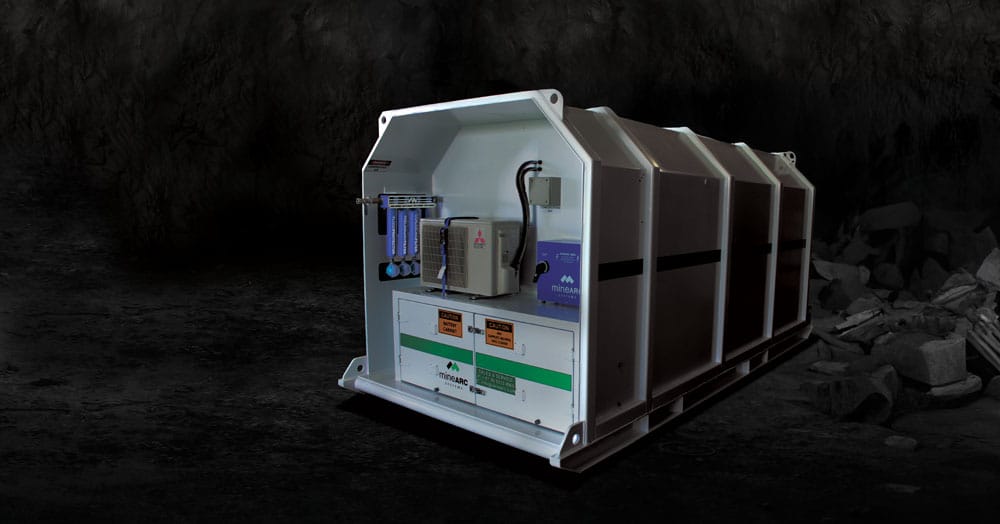
A refuge chamber spends almost all of its working life – more than 99% – on standby. This makes long-term stability, predictable behaviour, and safety under constant float charge far more important than energy density or weight savings.
AGM batteries excel in this environment. They are designed for continuous float service and can stay at full charge for extended periods without accelerated wear. Their performance is stable, consistent, and highly reliable even after long idle periods. When a chamber is called upon in an emergency, AGM batteries deliver dependable power exactly when it is needed most.
Lithium-ion batteries behave very differently on standby. These chemistries do not tolerate long-term float charging at 100% state of charge. To avoid premature ageing, they need to sit at partial charge and be regularly topped up. This introduces additional system complexity and can reduce effective autonomy unless extra battery capacity and more sophisticated controls are added.
Safety First, Especially Underground
Safety is the single most important factor in selecting a refuge chamber UPS. In this regard, AGM batteries offer a well-understood and inherently stable chemistry. Their failure modes are predictable, and any hydrogen produced during overcharge is minimal and easily managed through basic enclosure ventilation. AGM systems cannot enter thermal runaway and do not produce toxic gases during normal operation or discharge.
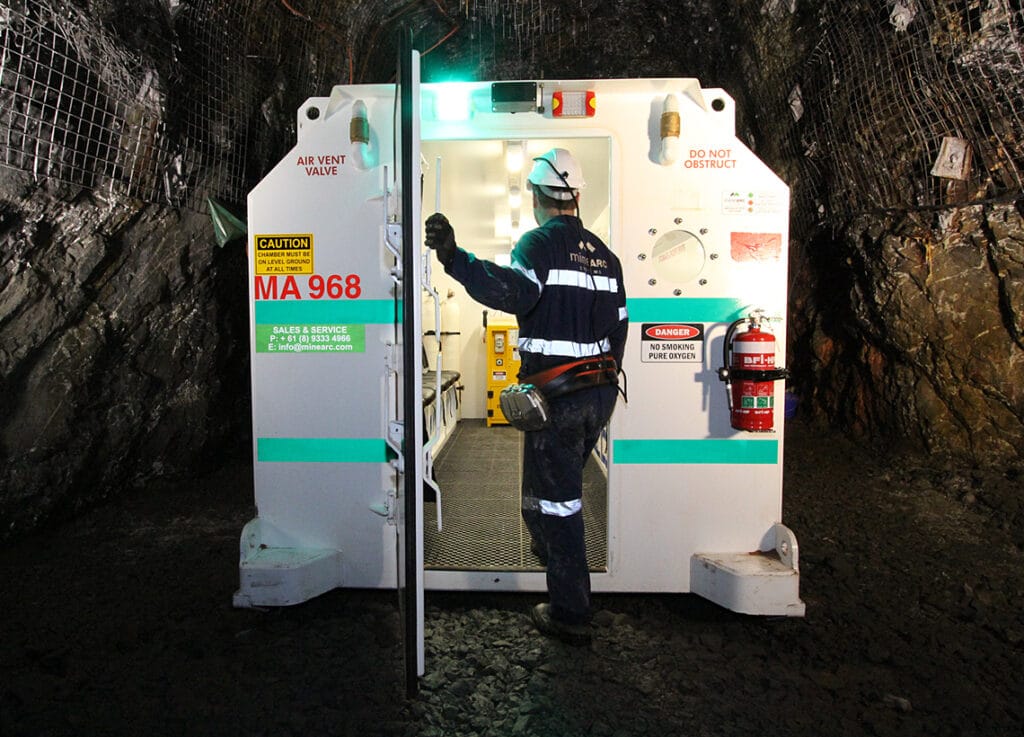
Lithium-ion batteries require a very different level of risk management. Even the safer LiFePO₄ chemistry can produce flammable and toxic gases, including hydrogen fluoride (HF), if a cell enters thermal runaway. This risk means lithium systems must be installed in fire-rated housings, physically separated from the chamber, and supported by advanced gas detection, dedicated venting paths, and specialised fire suppression. Their safety relies heavily on the correct operation of their Battery Management System (BMS), introducing additional failure points not present in AGM designs.
In a life-support environment, these hazards carry real consequences. If a UPS system becomes a source of fire or toxic gases during an emergency, personnel may avoid entering the nearest refuge chamber – a situation that could be life-threatening. AGM batteries eliminate this risk profile entirely.
Designed for Harsh Mining Environments
AGM systems are well suited to the temperature extremes, vibration, dust, and humidity found in underground mining. They can charge and discharge across a wide temperature range and continue to perform even under deep discharge events, making them ideal for refuge applications where reliability under stress is essential.
Lithium-ion systems are less forgiving. Their allowable charge temperature window is narrower, and many packs restrict charging above 45°C – a limit often exceeded in underground battery bays without added cooling. This may require thermal conditioning systems, increasing both cost and complexity.
Certification and Compliance
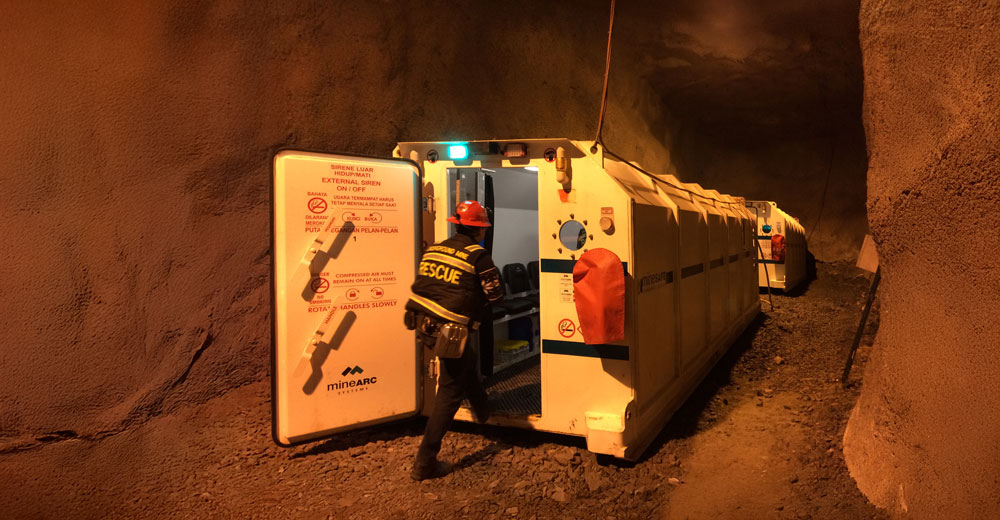
AGM technologies follow a straightforward and proven compliance pathway under AS/NZS 4871 and the WA DMIRS Refuge Chamber Guideline. Their behaviours, hazards, and controls are well understood by regulators, insurers, and mine operators.
Lithium-ion, by comparison, brings new and evolving certification requirements. Systems must comply with emerging standards such as IEC 62619 and UL 1973, and suppliers must demonstrate validated thermal-runaway testing (UL 9540A). Meeting these requirements adds further engineering, documentation, and integration demands.
The Bottom Line: Why MineARC Recommends AGM
Lithium-ion batteries certainly offer appealing benefits – lighter weight, higher energy density, and a modern design approach. However, when the priority is safety, reliability, and simplicity in a life-support environment, AGM remains the superior choice.
AGM batteries provide:
- Reliable, proven performance under years of standby operation
- Wide temperature tolerance without the need for conditioning
- Predictable, stable behaviour with no risk of thermal runaway
- Simple maintenance that does not rely on complex control systems
- A clear, established compliance pathway for underground mining
While lithium-ion technology continues to evolve, the additional safety controls, system complexity, and regulatory requirements currently make it unsuitable for refuge chambers without significant engineering adaptation — and even then, risk remains.
For critical life-support applications, the most important feature of a UPS system is not weight or energy density – it is absolute trust that it will perform safely and reliably every time. Today, AGM batteries continue to deliver that confidence better than any other option.